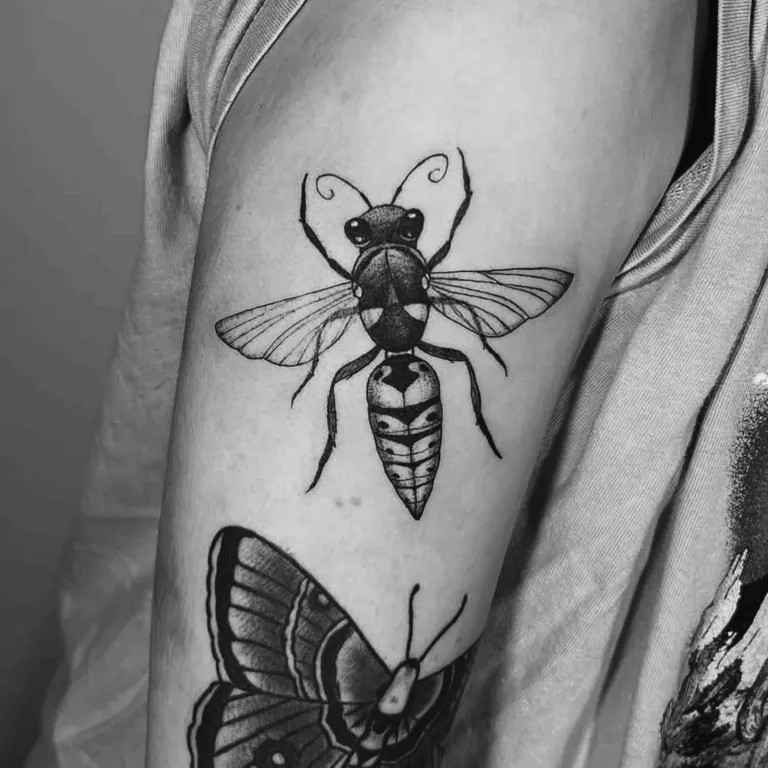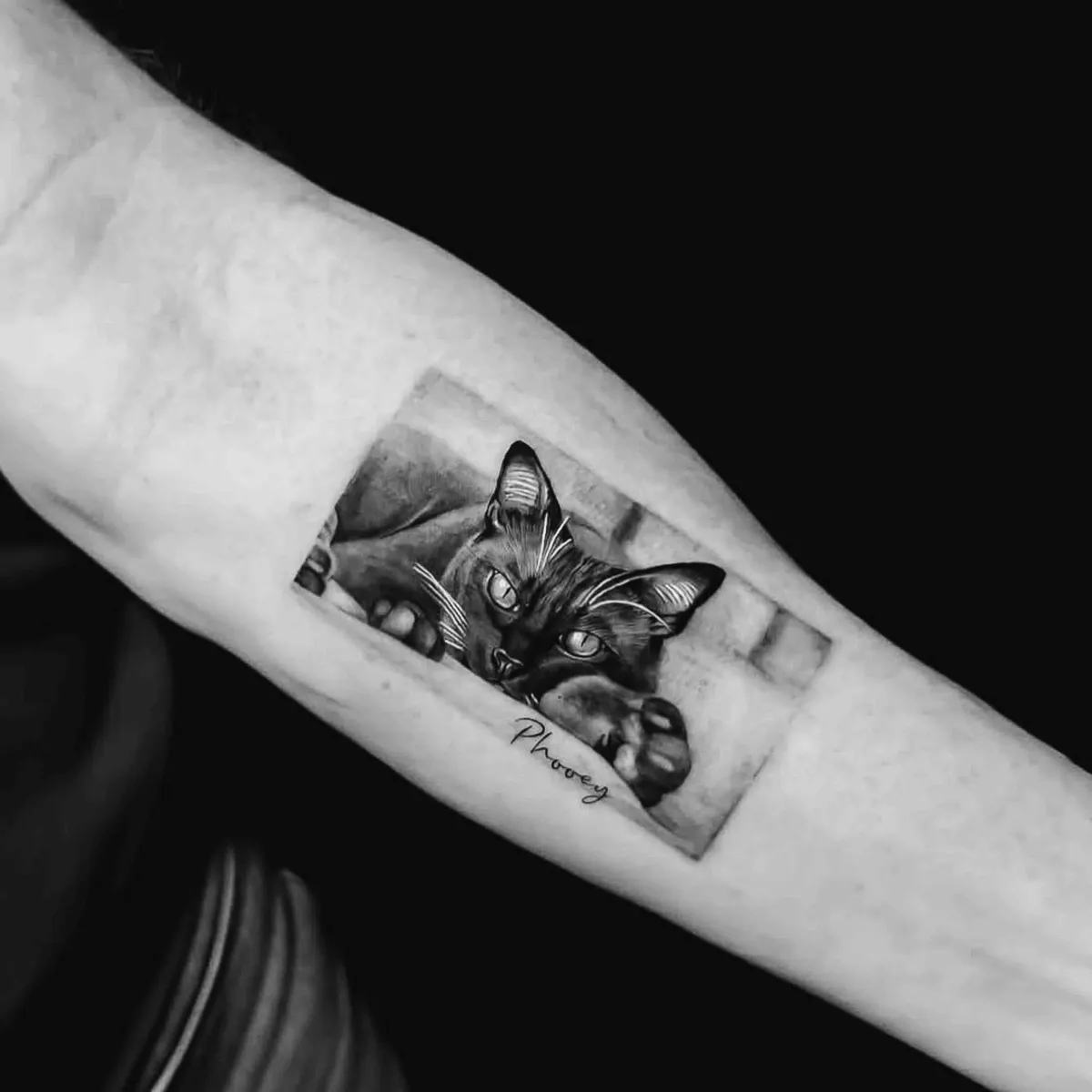
Of all the directions a tattoo can take, blackwork is the one that has quietly outlasted nearly every trend around it. It uses a single colour, black, and lets contrast, line and shape do the rest. That restraint is exactly why it endures. A piece built on solid black and clean negative space tends to read just as clearly in ten years as it did the week it healed. If you are drawn to something graphic, confident and made to age well, this is a style worth understanding properly before you commit.
What blackwork actually means
Blackwork is an umbrella term, and that is the first thing to get straight. At its simplest it means tattooing done entirely in black ink, no colour, and usually little to no grey shading either. Beyond that single rule, it covers a remarkable range. It can be a delicate botanical line drawing, a dense ornamental pattern, a bold graphic illustration, or a large solid field of pure black. What ties it together is not a subject but a discipline: the design is carried by the relationship between the ink you lay down and the bare skin you leave untouched.
That makes blackwork less a single look and more a family of looks. Where realism chases tonal subtlety and colour leans on hue, blackwork commits fully to contrast. Done well, it is one of the most striking things you can wear on skin.
Blackwork lives or dies on contrast, the black you lay down and the skin you leave bare are equal partners.
The strengths: why it ages so well
The reason artists keep recommending blackwork for pieces meant to last is straightforward. Solid black is the most stable thing you can put into skin. It holds its edge, resists fading better than fine colour or soft grey, and stays legible as the years soften everything around it. A bold design with strong lines and decisive black has the best odds of any style of still looking sharp decades on.
There is a design strength here too. Because blackwork relies on shape and contrast rather than detail you have to lean in to see, it reads cleanly from across a room. A well-composed blackwork piece has presence, it announces itself. For anyone who wants a tattoo that feels graphic and intentional rather than busy, that clarity is the whole appeal.
The styles within blackwork
It helps to know the main directions blackwork can go, because they ask different things of you and of the artist:
- Fine-line blackwork, delicate single-weight linework for botanicals, fine illustration and subtle imagery. Graphic, but quiet rather than heavy.
- Illustrative and graphic, bold outlines with confident black fills, owing a debt to print and etching. Strong and characterful.
- Ornamental and pattern, repeating geometry, mandalas and decorative motifs that follow the body's lines. Rewards symmetry and patience.
- Dotwork, tone and shading built from countless small dots rather than solid fill, giving a soft, textured gradient in pure black.
- Solid black and negative space, large fields of pure black where the design is partly defined by the skin deliberately left clear.
None of these is better than the others, they simply suit different ideas. Part of a good consultation is working out which language fits the picture in your head. If you are still narrowing down the broader field, our beginner's guide to tattoo styles is a useful place to start.
The craft behind solid black
A flat, even field of black is one of the harder things to do well, and it is worth knowing why. Packing a large area so it heals smooth, dense and free of patchiness takes real technique and a steady, methodical hand. Done carelessly, solid black can heal blotchy or pale in spots, and that is genuinely difficult to fix afterwards. Done with care, it heals into a deep, uniform black that is the foundation of the whole style.
This is the part where experience earns its keep. When you are looking at an artist's portfolio for blackwork, look closely at their healed solid fills, not just fresh photos, even, dense black on settled skin is the real proof. Larger solid areas also take longer to heal and can feel more tender as they settle, simply because more skin has been worked. None of that is a reason to avoid it; it is just worth knowing so the timeline makes sense.
A flat field of even, healed black is the quiet mark of a careful hand, look for it in a portfolio.
Negative space and placement
One of blackwork's most distinctive moves is using the skin itself as part of the picture. Negative space, the bare areas you leave inside or around the black, can carry as much of the design as the ink does. A shape defined by what is left clear can be more striking than one drawn in line. It takes confident planning, because once the black is down, the negative space is set.
Placement matters more than usual with bold black, too. Graphic pieces tend to sit beautifully on areas with room to breathe, the upper arm, the forearm, the calf, the back, where the design can hold its proportions. Because the contrast is so strong, blackwork also flatters most skin tones readily, which is part of its broad appeal. If placement is on your mind, our guide to choosing the right placement walks through how to think it through with your design in hand.
Is blackwork right for you?
Blackwork suits you if you are drawn to something graphic and decisive, value how a piece will age over how much fine detail it packs in, and like the idea of a tattoo that reads clearly for a lifetime. It is a particularly sensible direction for a first larger piece, because its strengths, contrast, simplicity, durability, are forgiving over the long run in a way busier styles are not.
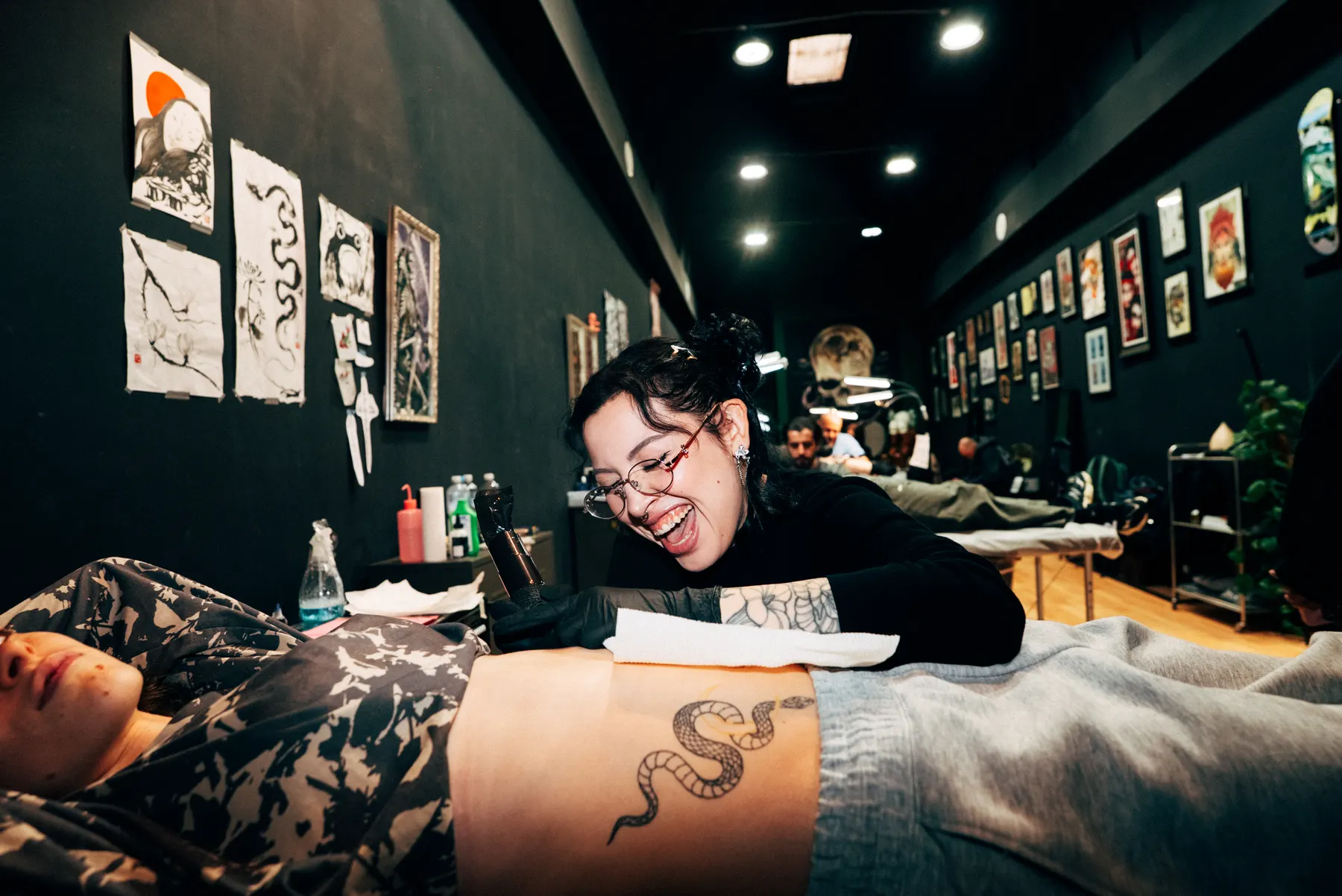
It is less the right fit if your heart is set on soft photographic realism or rich colour, where blackwork's bold restraint would work against the effect you want. There is no wrong answer here, only the right match for your idea, and that is precisely the conversation a consultation exists for. Here at Full Moon, on Chapel Street in Prahran, we take a moment to consider the piece, its size, placement and the story behind it, before recommending the approach that will serve it best.
One honest closing note that applies to any style: a tattoo is a sustained piece of work on living skin. Follow the aftercare your artist gives you while it settles, and remember that general guidance like this is no substitute for medical care, if a healing tattoo shows signs of infection such as spreading redness, heat, swelling or pus, see a doctor.